In Spain, teenagers aged 14 to 17 who are accused of a crime do not go through the adult criminal courts. Their case is handled under a separate law, the Juvenile Criminal Responsibility Act (Ley Orgánica 5/2000), by a specialised prosecutor and a Juvenile Court judge. The system is built around education and reintegration rather than punishment, but it is still a criminal process with real consequences, and the first hours and days matter a great deal.
Who does the juvenile system apply to?
The law applies to anyone who was between 14 and 17 years old at the time of the alleged offence. What counts is the age on the day of the facts, not the age when the case reaches court. A 17-year-old who turns 18 before the hearing is still tried as a minor.
Children under 14 cannot be held criminally responsible in Spain. If a younger child is involved in a serious incident, the matter is referred to the regional child protection services, who may assess the family situation and adopt protective measures, but there is no criminal case against the child.
The rules are the same for Spanish and foreign teenagers. A young tourist on holiday or a teenager living in Spain with their family will go through exactly the same process if the facts happened here.
Who is in charge of the case?
This is the first big difference with adult cases. In an adult case, an investigating judge leads the investigation. In a juvenile case, the investigation is led by the Juvenile Prosecutor's Office (Fiscalía de Menores), which opens a file known as an "expediente de reforma".
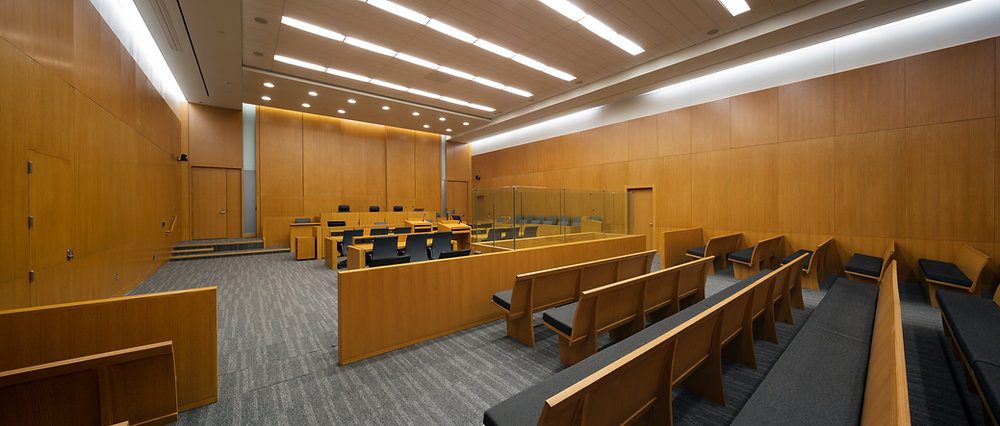
The Juvenile Court judge (Juez de Menores) supervises the process, decides on any measures that restrict the minor's rights, holds the hearing and issues the judgment.
A third key player is the technical team (equipo técnico), made up of a psychologist, a social worker and an educator. They interview the teenager and the family and prepare a report on the minor's personal, family, educational and social circumstances. That report carries real weight in what the prosecutor proposes and what the judge decides.
What happens if a teenager is detained?
Detention of a minor is subject to stricter rules than for adults:
- The police must inform the teenager of their rights in language they can understand, and notify their parents or guardians immediately. If the minor is foreign, the consulate must also be informed.
- The minor must be held separately from adult detainees.
- Any statement to the police must be made in the presence of a lawyer and, as a rule, of a parent or guardian.
- The police can hold the minor for a maximum of 24 hours before placing them at the disposal of the Juvenile Prosecutor.
- The prosecutor then has 48 hours to decide whether to release the minor, close the matter, or ask the judge for a precautionary measure.
The right to remain silent applies in full. As with adults, a teenager should not give any statement without first speaking privately with their lawyer.
Can the case end without a trial?
Yes, and this is one of the most important features of the juvenile system. There are several ways a case can end early:
- Withdrawal by the prosecutor (desistimiento): for less serious offences committed without violence or intimidation, and where the minor has no previous record of similar conduct, the prosecutor can decide not to open proceedings and pass the matter to child protection services instead.
- Conciliation or reparation: the teenager can apologise to the victim, repair the damage or carry out an educational activity agreed with the technical team. If this is completed, the prosecutor can ask the judge to close the case. This route is not available for the most serious offences.
- Agreement (conformidad): if the case goes forward, the minor and their lawyer can accept the facts and the measure proposed by the prosecutor, avoiding a full hearing. The judge must check that the agreement is freely given and appropriate.
Whether one of these routes is realistic depends on the offence, the evidence and the teenager's circumstances. A lawyer who knows the juvenile courts can often steer the case in this direction early on.
What measures can a Juvenile Court impose?
Juvenile courts do not impose "sentences" in the adult sense. They impose measures (medidas), chosen according to the seriousness of the facts and, above all, the needs of the minor. The main ones are:
- A formal warning from the judge (amonestación).
- Community service, which always requires the minor's consent.
- Socio-educational tasks, such as courses or training.
- Supervised probation (libertad vigilada), with regular follow-up by a professional and conditions such as attending school.
- Weekend detention, at home or in a centre.
- Attendance at a day centre, or outpatient therapeutic treatment.
- Living with another person, family or educational group.
- Restraining orders prohibiting contact with or approaching the victim.
- Withdrawal of a driving licence or moped licence, or of the right to obtain one.
- Placement in a juvenile centre (internamiento), under an open, semi-open or closed regime, or a therapeutic one.
As a general rule, measures last up to two years. For serious offences, and especially for 16 and 17-year-olds, the law allows longer periods, and for the most serious crimes closed placement can last several years.
Do parents have to pay?
The criminal measure is for the teenager alone, but the civil consequences are not. Parents and legal guardians are jointly liable with the minor for compensating the victim for the damage caused. The judge can reduce that liability if the parents did not encourage the conduct and were not seriously negligent, but in practice families should expect any compensation claim to be directed at them.
The victim can also take part in the proceedings as a private prosecutor, propose evidence and claim compensation.
Will it leave a criminal record?
Judgments against minors are recorded in a separate juvenile register, not in the ordinary adult criminal record. This register can only be consulted by courts and prosecutors, and entries are cancelled after a period of time. In practice, a juvenile judgment does not appear on the certificate an employer or a foreign authority would request. It can, however, be taken into account by the courts if the young person reoffends.
Juvenile proceedings are also confidential. The media cannot publish the minor's identity, and the judge can order the hearing to be held behind closed doors.
Practical advice for parents
- Call a lawyer as soon as you know your child has been detained or is being investigated. You are entitled to choose your own lawyer rather than rely on the one appointed by the duty service.
- Do not let your child give any statement, to the police or anyone else, before speaking with their lawyer.
- Do not contact the victim or witnesses to "sort it out". If an apology or reparation is appropriate, it should go through the formal conciliation process so that it counts.
- Take the interview with the technical team seriously. Bring school reports, information about activities, and anything that shows the support your child has at home.
- If you live abroad or are on holiday, tell the lawyer straight away. Precautionary measures or court dates can affect when your child can leave Spain, and this needs to be planned.
In summary
Spain's juvenile justice system gives teenagers a real chance to put things right, with early resolution, educational measures and no adult criminal record. But it only works in your child's favour if the case is handled carefully from the very first statement. The decisions made in the first 48 hours often shape everything that follows.